Edinburgh

We landed at the Edinburgh airport on August 22 after flying from San Francisco to New York and then transferring to a flight to Edinburgh.

Our flight from San Francisco was delayed an hour and a half. Fortunately our connecting flight from New York was delayed as well. Transferring planes in New York was a bit stressful since we had to hoof it from one terminal to another, then pass through TSA inspection again with our luggage in tow in fear that we’d miss our connecting flight.

We spent three nights in Edinburgh; hardly enough time to see the city, but our preference is to minimize our time in cities and to explore the countryside. We found a Bed and Breakfast just off The Meadows that was convenient for walking to many of the sights we wanted to see. We also found the public transit system worked well. I wrote about our walk to Aurthur’s Seat in an earlier post. Edinburgh has so much to offer that it demands at least a few more words.

Having checked into our accommodations we were anxious to explore the city. We didn’t get far before hunger took over and passing a pizza joint we opted for pizza and beer to celebrate. Pizza on our first night in Scotland seems a bit lame, but so it goes. Over the next three and a half weeks we had the opportunity to enjoy much of Scotland’s culinary offerings from seafood to black pudding and haggis.

On one of the evenings in the city we made our way up the Esplanade at Edinburgh Castle where we found our reserved seats for the Royal Edinburgh Military Tattoo. Wow! What an extravaganza; so many bagpipes. The performance included military bands from all around the world as well as a Mexican Dance troop, Banda Monumental De México. This was quite an entertaining event. Highly recommended.

And of course, as a photographer, one of the things I like to do is to explore the city at dusk. Another adventure took me to Victoria Street and to a viewpoint of Edinburgh Castle.

And no visit to Edinburgh is complete without a visit to Dean Village. We had a lovely walk across town to Dean Village, a beautiful village right by the Water of Leith. You can view more photos online and read more posts about our Scotland trip as well.

Hot Creek

East of the Sierra Nevada Mountains, not far from Mammoth Lakes, is an area known as the Long Valley Caldera. This is a geologically active area with steam vents, geysers, and hot springs, the remnants of an ancient volcano. I’ve been visiting the Eastern Sierra for several decades and only this year decided to check out the area known as the Hot Creek Geologic Site.

My plan was to scout the location with the intention of returning in the morning when the steam from the many vents would be visible in the cool morning air. As it turned out, we had some dramatic weather with rain and hail and that was enough to appease my photographer’s eye.

There are a number of trails you can hike in the area with signs warning you to stay out of the water. Some of the pools are boiling hot. Despite the warnings we did see several people in the creek.

From the Hot Creek site, we decided to head for camp. Our intended camping site was a spot referred to as Laurel Springs on iOverlander, a “wild” campsite site just off of Highway 395. In trying to locate the site we apparently drove past it. Rather that turn around, we decided to follow the forest service road to see if we could find another suitable spot to park our rig. It wasn’t long before the road deteriorated a bit and I shifted into four-wheel drive. Then as the road got a bit rockier it was four-wheel low. You can see a photo of my shadow on the road looking east with Crowley Lake in the distance. We climbed up a valley to a ridge and there at the end of the road was a campsite with a picnic table and an incredible view. On one side of the ridge we could look east with a view of Crowley Lake, on the other side was a view of Convict Lake. In the morning I put the drone in the air to capture a view of our rig with Laurel Mountain and Convict Lake in the background.

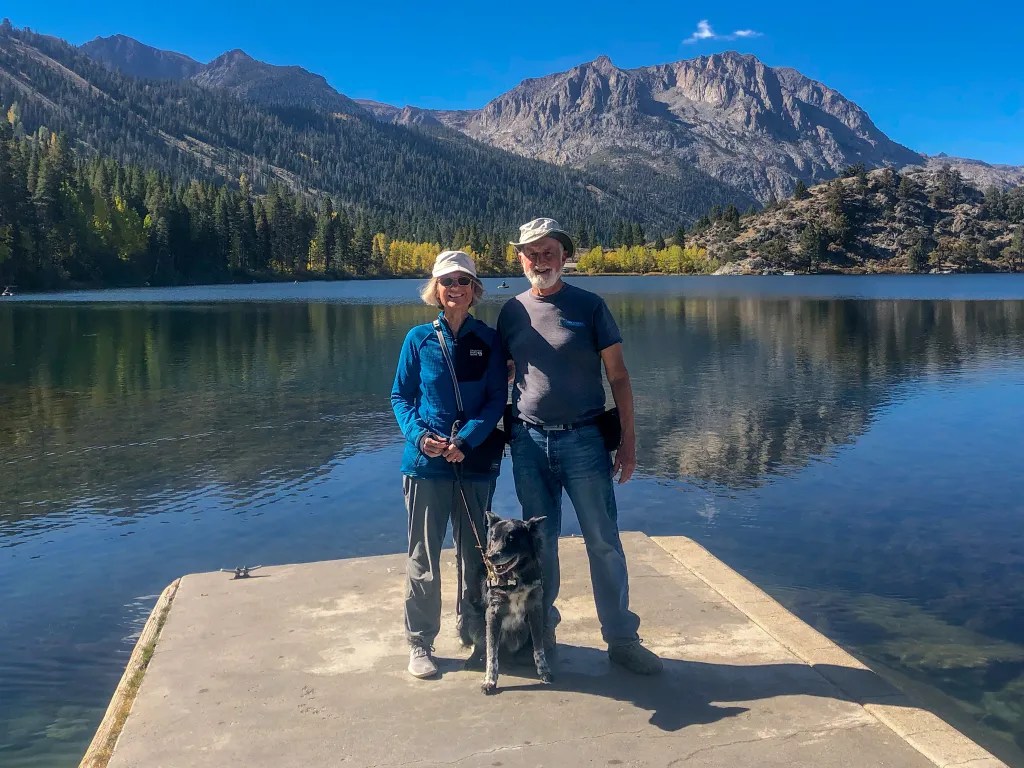
That morning, October 11, we broke camp and continued our journey home. We made a quick tour of the June Lake Loop, stopping at Gull Lake to walk the dog and admire the view. We found quite a few pockets of fall color, but for the most part the aspens were still green.

Our route home took us over Tioga Pass on highway 120. Near the summit we stopped for one last peek at the fall color on the mountainside. Then we drove down into Yosemite Valley thinking there might be a remote chance of camping. We were impressed by how busy the valley was. No luck finding camping, so we headed home. More photos are available online.

Gylen Castle

Getting sick while traveling put a kink in our plans. On September 2, about 12 days into our trip, I woke up feeling quite ill. We had a COVID test kit with us and I tested positive. We were able to extend our stay at the Pennygate Lodge in Craignure. After a few days there we moved to an apartment in Oban for a few more nights. This meant we would not be spending time at the Iona Abbey as planned, but it did give us a few more days to explore Oban. Once we were feeling better, we decided a trip to the Isle of Kerrera was in order. To get to the island we walked the short distance to the Oban wharf where we hailed a taxi to take us to the Kerrera Ferry.

This is a small ferry that can only carry a dozen or so people. We ended up having to wait for a few crossings, which didn’t amount to much time since the ride across the channel takes all of 10 minutes. That said, if you do plan to visit the island allow plenty of time in the event that you end up waiting.

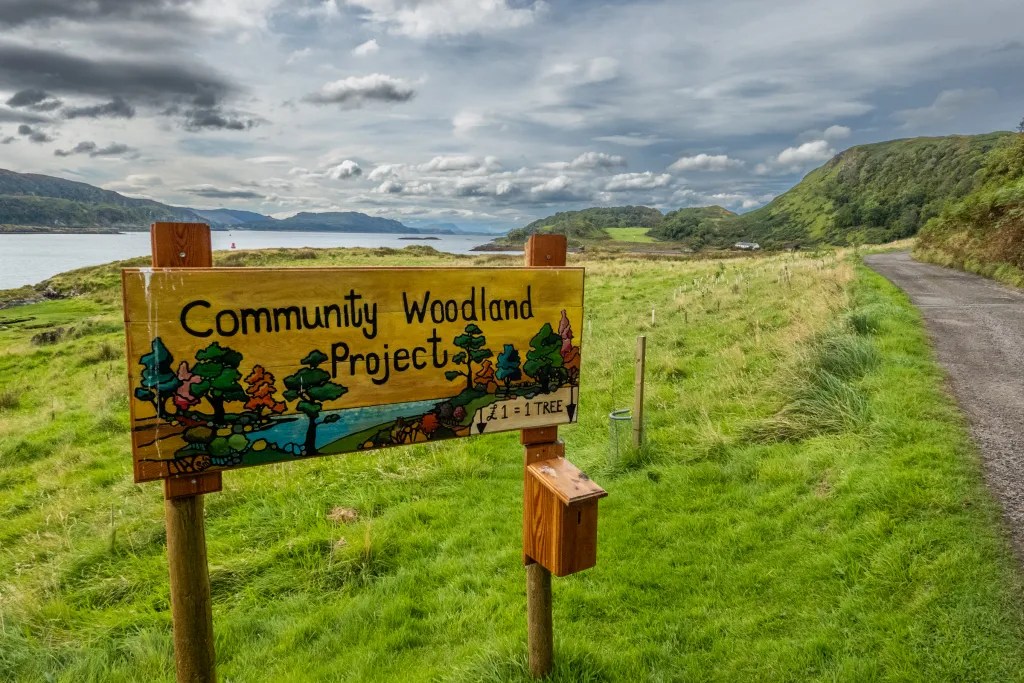
Once on the island it’s a two mile walk to Kerrera Tea Room and the castle. It’s a very pretty walk past farms and pastures overlooking the Sound of Kerrera. We passed through a number of gates, being sure to close them after passing through. At the top of a rise just before reaching the tea room we found a gate with a sign “It’s all downhill from here!”

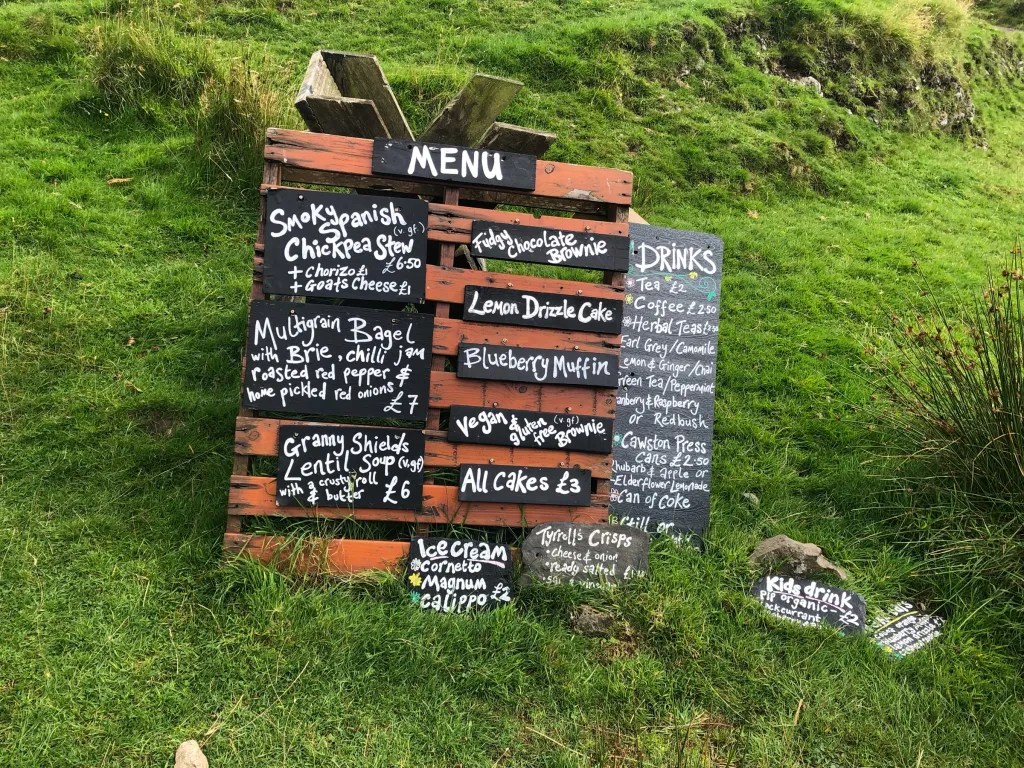
It was just after noon when we reached the tea garden. Smoky Spanish Chickpea Stew and fresh bread were a welcome treat after the walk. After lunch it was a short walk to the castle where we spent some time exploring the ruins.

The castle overlooking the Firth of Lorn was built in 1582 by the Clan MacDougall, but was only occupied for a short time. It was burned by the Covenanters in 1647 during the Wars of the Three Kingdoms.

Once we had explored the castle and peeked through the windows, we made our way back to Oban and on to Kilmartin on the afternoon bus. You can view more photos online. Here’s the track of our walk on the island.

Arthur’s Seat

Our trip to Scotland started in Edinburgh on August 21. We spent a couple of days there to adjust to the eight-hour time difference. One of the popular things to do in Edinburgh is to hike to Arthur’s Seat. This is an ancient volcano in the hills in Edinburgh. This mountain was described by Robert Louis Stevenson as “a hill for magnitude, a mountain in virtue of its bold design.” There are a number of car parks that give easy access, however, being on foot, we turned it into a healthy day hike. We started out from our accommodations near The Meadows and made our way across town to Holyrood Palace, then up the trail to Arthur’s Seat.

While only a 1000 foot climb, it was a challenge getting to the top. From there we had a panoramic view of the city below.

Our host at the Bed & Breakfast suggested we follow the trail down the far side to make our way to the Sheep’s Heid Inn for lunch. The sign over the door says the inn was established in 1360, making it one of Edinburgh’s oldest pubs. We ordered the Pan-fired Wild Scallops ras el hanout, smoked haddock Florentine bonbons, celeriac purée, apple & fennel tartar. A delicious lunch after our walk.

When we returned to our lodgings, we discovered that we had walked 8 miles. It was time to take off our hiking boots and put our feet up. You can view more photos online.

Ancient Ruins in Kilmartin

Kilmartin Glen is considered to have one of the most important concentrations of Neolithic and Bronze Age remains in Scotland. That seemed reason enough to spend a few days there. Some of the ruins date back more than 5,000 years. These include a multitude of cairns, standing stones, carved rock, stone circles, forts, and castles.

There are a number of walks in the area leading to some of the features. So Saturday, September 10, we donned our hiking boots to go exploring. The most prominent features are a series of stone cairns which served as burial sites. These are oriented in a north-south line through the glen. We started with the Glebe Cairn and followed the trail to Nether Largie North Cairn, Nether Largie Mid Cairn, Nether Largie South Cairn, and Temple Wood.

The Nether Largie North Cairn has been excavated and you can climb down into the burial chamber through a sliding trap door. Once inside you can see the capstone with cup-shaped markings.

What is here today is not necessarily intact. Over the millennia, a number of the stones in the cairns have been taken away to be used as building material. The sites have been excavated for archaeological research and reconstructed to their present-day form. Even with all these disturbances it’s remarkable to visit these sites and imagine what life was like here 5,000 years ago, with a society that had people of prominence worthy of such elaborate burial. It may be the flow of metals being traded through the glen that gave rise to this society.

The Nether Largie South Cairn is perhaps one of the most interesting. Here you can climb down inside and imagine what sacred ceremonies may have happened here.

In addition to the Cairns, there are a number of standing stones throughout the glen and a circle of standing stones at Temple Grove. Following our exploration of the Neolithic sites, we made our way to the Kilmartin Church to explore some of the gravestones in the graveyard. The church was closed, but it was still quite interesting to see gravestones dating back hundreds of years. The Kilmartin museum was also closed for renovation, which was a bit of a disappointment. It would have been interesting to have additional information to help interpret the history of the glen.

Even though it was an easy walk through the glen, we managed to log six miles.

Carnassarie Castle

Today, September 11, marks our 22nd day of travel in Scotland. We’ve had many adventures over the past three weeks. Some of those adventures will eventually make their way into this blog, but for today, I’ll share our walk to Carnassarie Castle. And, of course, at the top of the news is the passing of Queen Elizabeth II. That caused us to revise our plans for returning to the Edinburgh airport for our flight home. Nevertheless, it didn’t stop us from lacing up our hiking boots and going on a walk after a hearty Scottish Breakfast at our B&B here in Kilmartin, Old Manse.

Our track led us along several country paths, up into the hills, through woods and past babbling streams. Then we climbed a hill to the castle where we spent quite some time going up and down many flights of narrow circular stairs to admire the view. The castle was built between 1565 and 1572 by John Carswell who had been granted the land by the Earl of Argyll. Carswell would become the Bishop of the Isles and was instrumental in translating the Book of Common Order into Gaelic, which became the earliest book to be translated into Scots Gaelic.

The overcast sky with threat of rain provided some nice soft lighting to set the castle in a surrounding landscape of green rolling hills and woods.

After climbing all the stairs and poking into rooms and windows, we found a spot to break out our lunch of cheese and crackers.

We returned to the town of Kilmartin by retracing our steps, walking by an apparently abandoned caravan which seems to have a picturesque spot along the track. Back in town we stopped at the museum café for a bowl of hot lentil soup, muffins and coffee. The museum is closed at the moment for renovation, but that didn’t deter us from enjoying a cool pleasant day in the area of Scotland known for its archeological significance, with ruins going back over 5,000 years.

Ruby Mountains

Continuing on our road trip to New Mexico, on the afternoon of July 10 we left Highway 80 near Elko Nevada and drove 35 miles up into the Ruby Mountains. Our campsite at Thomas Canyon Campground was situated at an elevation of 7,600 feet. While most of the drive across Nevada is arid desert, Thomas Canyon is in a lush grove of aspen surrounded by wildflowers. We spent two nights here, giving us one day to take a delightful hike up the canyon.

We were happy to find that fires were permitted and we bought firewood from the camp host. These days one isn’t guaranteed a campfire, given dry conditions with high fire risk. The next morning we fired up the Dutch oven for a breakfast of hash brown crusted quiche. A delicious breakfast before we set off on our hike. The hike goes 2.25 miles up the canyon, so up and back we logged 4.5 miles.

The hike climbs from about 7,600 feet to 8,900 feet through aspen groves and meadows of wildflowers, following Thomas Creek for much of the way. Here’s the track of our hike.

In the evening I took my big camera out and grabbed my tripod to see what I could find in the late afternoon light. Lo and behold I found a sunlit grove of trees that looked like fall color in the last rays of light. Some of these image will be in my art store shortly. You can view more photos in an online gallery.

A Week at Loon Lake

Nestled high in the Sierra Nevada Mountains at 6,400 feet is a gorgeous lake, Loon Lake. Crystal clear water surrounded by forests, granite boulders, and patches of wildflowers. Twenty-eight miles up a windy road takes you off the main highway deep into the Sierra Nevada mountains not far from the Desolation Wilderness. We anticipated meeting a number of fellow kayakers, members of Bay Area Sea Kayakers (BASK), for a week of paddling, hiking, wildflower hunting, birdwatching, and camaraderie.

We arrived on Sunday evening, June 12, dropping off our boats near the boat ramp and finding campsite 44. We parked, popped the top up on the camper and joined one of our camp buddies, Eoin, who was preparing dinner for our cook group. The next morning, I put my drone in the air to capture a photo of our campsite.

June 13 – Rubicon Trail Hike

Monday we opted to explore the north end of the lake on foot, driving to the Rubicon Trail Staging Area and making our way partly around the lake. The Rubicon Trail is widely recognized as the premiere OHV route in the United States. As hikers, we decided to stay off the jeep trail and try to find a route that was hiker friendly. We ended up off-trail, making our way over bare rock, through thickets of trees and down through a bog. It was spectacular country but slow going as we bushwhacked. After a couple of hours, we managed to cover 2.5 miles.

June 14 – Paddle – North End of Lake

Tuesday morning we were up early to fire up the Dutch Oven and cook a breakfast of mushroom and brie breakfast strada, one of our favorite camping breakfasts. With breakfast out of the way we assembled at the boat ramp. Our route took us along the eastern shore of the lake, noodling along and poking into coves and inlets, passing a small waterfall at one point. We stopped at Pleasant Campground for lunch and then continued exploring the north end of the lake.

With the wind starting to build in the afternoon, we decided to make our way back to our launch point. We covered 10 miles in the five and half hours of our adventure.

June 15 – Paddle – South End of Lake

Having explored much of the north end of the lake, today we explored some of the islands at the south end of the lake, making our way north to a lovely lunch spot on a granite spit. We had fun doing some flatwater rock gardening in a group of rocks. I even managed to get the drone in the air to capture some aerial views, something that I’ve wanted to do for some time, but usually the logistics of paddling take priority over the logistics of flying a drone.

Again, the wind came up after lunch and we made haste back to camp, hugging the shore to avoid the brunt of the wind. We logged 6.9 miles over the course of our paddle.

June 16 – Loon Lake Trail

With two days of paddling behind us it was time for a hike. Our dog Carson had two days in the camper and it was time to give him some off-leash time. We followed the Loon Lake Trail along the east side of the lake, paralleling the route we had paddled two days before. This hike took us through some lovely forests, through glens of freshly sprouted bracken fern, over sections of bare granite rock with occasional views of the lake.

We stopped for lunch just shy of Pleasant Campground on a slab of granite with a view of the lake. There we watched the white caps on the lake and were glad we had done our paddling earlier in the week. We admired many wildflowers along the trail and covered 7.3 miles.

Please view more photos of the trip in an online gallery.

San Bruno Mountain

On May 16 we met a few friends for a hike on San Bruno Mountain. This is a state park covering 2,400 acres, an island of rugged open space in the middle of a highly urbanized environment. It is also home to a number of plants and animals that are endemic to the mountain.

It promised to be a warm sunny day as we departed Berkeley, but when we parked at the trail head we were confronted with a chilly and blustery wind with fog billowing over the ridge. I promptly broke out all my layers. We hiked the Summit Loop Trail starting at the parking lot just off of Guadalupe Canyon Parkway.

I was surprised at the diversity of habitats. This included coastal scrub, oak woodland, chaparral and riparian habitats. There are also a variety of wildflowers. This year the spring wildflower display was not as magnificent as it can be. Even so we saw a variety including iris, aster, foxglove, lupine, and poppies.

I was also surprised with how lush and green the the mountainsides were. We hiked through tree tunnels and past glens of ferns. Quite a difference from our usual hikes in Tilden Park. Perhaps since the mountain captures the fog off the coast it gets more moisture than the East Bay Hills, providing more diversity.

We stopped where the trail crosses Battery 59 Road just short of the summit and opted to retrace our route back to the car. This was deemed to be the preferred route, rather than continuing the loop with the idea that the rest of the loop is not quite as interesting. We were on the trail for a little over two hours and logged 4.5 miles. Definitely a place to revisit with its diversity of plants and animals.

More photos are available in an online gallery.

Reunion in Bishop

In April 2017, my two brothers and I gathered together with our families to memorialize my father. We made a commitment to gather as a family on a regular basis. In 2020 we set our sights on Bishop in the Eastern Sierra and booked accommodations at the Eastside Guest House and Bivy. Then COVID-19 struck, and we scrapped our plans. With the pandemic easing up this year we decided to make another go at gathering. Family started arriving on Saturday evening, April 24, with people coming from Washington, Texas, Hawaii, and Massachusetts. My wife and I and our lovely Aunt Sue, being the hosts, arrived the day before to give us time to stock the larder with groceries. Eastside Guest House is an ideal location in the Eastern Sierra to set up a base camp for outdoor adventures. The facility has private rooms, a duck pond, a view of the Sierra Nevada Mountains, and a common room for cooking and meeting.

We had the barbeque going as guests arrived. Joann and Sue had prepared skewers of Shish kebab which we put on the grill as family joined us.

April 25. The Alabama Hills and Independence

The day started with Lemon Ricotta Waffles. I had arranged ahead of time to have a couple waffle irons available and, with plenty of family chipping in, we were serving waffles at 8 a.m. Waffles with whipped cream, butter, syrup, berries and lots of other goodies.

After breakfast we set up a sandwich station. Line up and make a lunch. Then we piled into cars for the drive to the Alabama Hills.

There is much to see on the drive south from Bishop. Some of our party made a visit to the Manzanar National Historic Site, one of the sites where Japanese Americans were incarcerated during World War II. A few of us stopped at the Mary DeDecker Native Plant Garden and the Eastern California Museum in Independence. The museum has an amazing collection of native American basketry and the garden was looking very nice with many plants in bloom. We also took advantage of the delicious ice cream at the Eastern Sierra Ice Cream Company.

April 26. Big Pine Lakes

Monday morning everybody was on their own for breakfast. Take your pick of oatmeal, eggs, bacon, sausage, toast, raisin bran, other packaged cereals, apples, oranges, and bananas. And if that isn’t enough you can walk next door to Schat’s Bakery for espresso and pastries. Then we again set up the sandwich station.

Several in our group were anxious to get into the High Sierra. Despite the fact that the trails are usually snowed in this time of year, it looked like we might be able to hike to one or two lakes in the Big Pine Lake Basin. We piled into our cars and drove to the trailhead at the end of Glacier Lodge Road.

My wife and I made it as far as First Lake at 10,000 feet. My two brothers and clan made it to Fourth Lake at 11,000 feet. We did find a few patches of snow on the trail, but nothing that required technical gear. First Lake still had some ice. The higher lakes were still frozen over. We logged 9.5 miles on our hike to and from First Lake. You can see a map on my GaiaGPS account. Those that went higher logged 12 miles or so.

April 27. Pleasant Valley Reservoir

With family members ranging in age from 3 1/2 to 84, we opted to do an outing close to Bishop to accommodate those not inclined to tackle a strenuous High Sierra hike. We found a level paved trail along Pleasant Valley Reservoir. This proved to be a lovely hike with opportunities to look for wildflowers and birds.

The more adventuresome drove up to the Ancient Bristlecone Pine Forest and reported a lovely outing. Tuesday evening marked our last day together, and we had a birthday to celebrate.

The next morning we said our goodbyes and began our drive back over the mountains.

There is so much to see in the Eastern Sierra. I was sad to leave, but since we have family there, we manage to visit several times a year. The Eastside Guest House and Bivy was a delightful place to host our reunion. The large community room, while being shared with other guests, proved to be a great place to gather, chat, and look at family photos. And talking about photos, you can view more online.